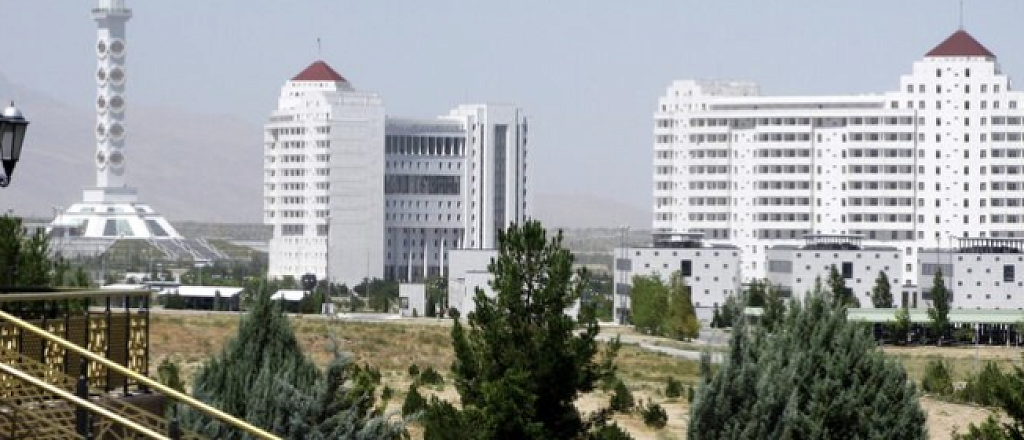

White-marble Ashgabat is designed like a showcase, which is exactly why it’s worth looking beyond its polished façade to see what lies behind it. Here are places that reveal a different side of Turkmenistan’s capital.
Akhal-Teke Horse Stables
The Akhal-Teke horse is a national symbol of Turkmenistan, featured on the country’s coat of arms and currency. The breed is around 3,000 years old and считается one of the oldest riding breeds in the world. State horse farms operate in the outskirts of Ashgabat, offering guided tours. Seeing these horses up close is an experience no city museum can match.
The stables also provide a glimpse into everyday life, where local riders work with their horses as part of their daily routine. In Turkmen culture, horses are treated with deep respect and familiarity.
Horse races and competitions take place during national holidays, especially Nowruz and the Day of the Akhal-Teke Horse, celebrated every April.
Ertogrul Gazi Mosque
The largest mosque within Ashgabat, named after the Ottoman leader Ertogrul, features a spacious courtyard and marble fountains shaped like halves of eight-pointed stars. Unlike the Turkmenbashi Ruhy Mosque outside the city, this one is easier to access and less dominated by organized tours, offering a more authentic urban atmosphere — especially on Fridays. The painted ceilings in the courtyard and carpets laid outdoors during holidays are particularly worth seeing.
Turkmen Carpet Museum
The only museum of its kind in the world, opened in 1993. It houses around 2,000 carpets — from 17th-century silk pieces to a record-breaking carpet over 300 square meters in size, listed in the Guinness World Records in 2003.
In Turkmenistan, carpets have official national significance: five ornamental “gul” symbols representing the country’s major tribes are featured on the national flag and coat of arms. The museum also has a restoration workshop, where one square meter of an antique carpet can contain up to 1,350,000 knots. There is also a shop with export certification from the Ministry of Carpets.
Gorka Hill
In the very center of Ashgabat lies its oldest historical site — Gorka Hill, the remains of a Parthian-era fortress dating from the 3rd century BCE to the 3rd century CE. Nearby are the parliament building, the “Turkmenistan” hotel, and a memorial with an Eternal Flame.
There are no signs or information boards, so it’s easy to miss. Surrounded by monumental architecture, the hill blends into the landscape — yet beneath your feet lies the city’s oldest cultural layer.
“Bagt Koshgi” Wedding Palace
This 11-story building, covering more than 38,000 square meters, is designed as a three-tiered structure, each side forming an eight-pointed star. At the top sits a cube with a 32-meter sphere symbolizing the Earth with a map of Turkmenistan. Four entrances represent the four cardinal directions.Inside, there are six ceremonial halls and three banquet halls, one of which can host up to 1,000 guests. Even from the outside, the palace is impressive — especially at dusk when it is illuminated.
Interestingly, “Bagt Koshgi” was built in 2011 for $133 million, during the global financial crisis, when many countries were cutting budgets.
Botanical Garden
Located in the southern part of the city near the foothills of the Kopet Dag mountains, the garden is designed for continuous blooming: coniferous trees grow alongside shrubs and a rose garden with more than 500 varieties.
Unlike many urban green spaces, people come here not for fountains but for quiet and the scent of plants. The best time to visit is March and April, when roses and most shrubs are in bloom. In summer, the garden offers a refuge from the heat, with noticeably cooler temperatures in the shade.
Gonur Depe
An archaeological complex located about 500 kilometers from the capital, Gonur Depe is a site of excavations that reshape our understanding of the region’s ancient history. Dating back to the Bronze Age, it represents an advanced urban civilization comparable to Troy.
The journey is long, but tours from Ashgabat are available. Visiting Gonur Depe changes your sense of scale — after it, Ashgabat’s white marble feels like very recent history.
What to Know
Entry into Turkmenistan requires a visa, which must be obtained in advance through an embassy or tour operator. Independent travel within Ashgabat is possible, but trips to other regions require special permits. Keep in mind that photographing government buildings and military sites is prohibited.