



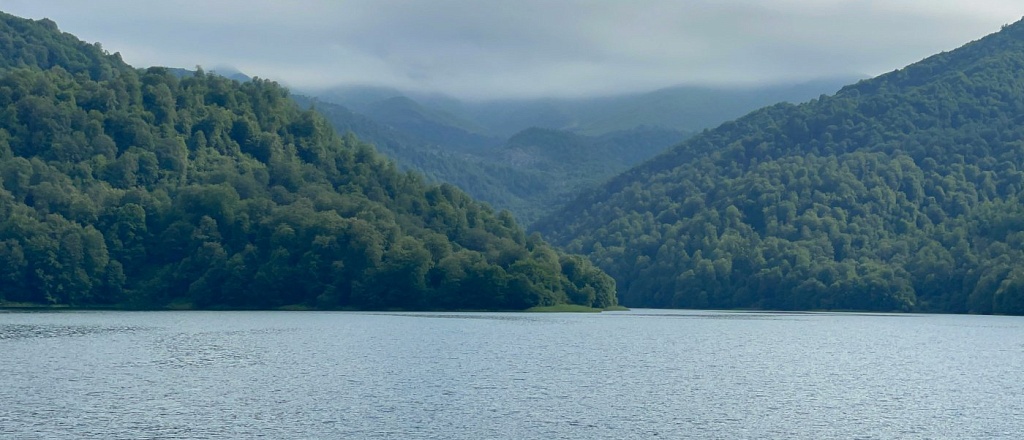

Ganja is one of the oldest cities in the Caucasus. It was once home to the great poet Nizami Ganjavi, where Persian shahs commissioned mosques and churches were built through joint donations from Orthodox Christians and Muslims. Today, it is Azerbaijan’s second largest city, known for its wide green avenues, affordable prices, and calm, unhurried atmosphere. Here’s what to see, what to try and how to get there.
How to get to Ganja
It takes about four and a half hours to drive from Baku to Ganja. The road is in good condition and runs through the foothills, offering scenic views of the Lesser Caucasus along the way.
An alternative option is the train, which takes around four hours and runs daily. Departures are at 18:00 from Baku and 09:44 from Ganja. Tickets are available at ady.az.
What to Try
Ganja’s cuisine differs from Baku’s. Many familiar dishes have local variations that are worth trying, namely here.
Ganja pakhlava
Lighter and less sugary than in Baku, it is baked over coals on a honey coated tray. You can smell its caramel aroma from afar.
Ganja dovga
A cold yogurt based soup with herbs that refreshes better than lemonade on a hot day. In some family run places, it is only served during the warmer months.
Ganja qutab
Thin fried flatbreads filled with herbs or cheese. In Ganja, they are slightly thicker with a firmer edge, giving them a different texture and taste compared to what you might be used to in Baku.
What to visit
Juma Mosque
Built in 1606 by order of the shah Abbas I the Great and designed by Sheikh Baha ad Din, this mosque is made from Ganja’s distinctive red brick. Two slender minarets were added later in 1776. For many years, a madrasa operated here, where the poet Mirza Shafi Vazeh taught calligraphy. Inside, it is quiet and cool, with an atmosphere that invites you to pause and reflect.
Alexander Nevsky Church
One of Ganja’s most notable facts is that this Orthodox church, built in 1887, was funded by both Christians and Muslims. Constructed in Byzantine style using “plinfa” brick, it is listed in Azerbaijan’s National Register of Monuments. The church is active, with services held on Saturdays, Sundays, and public holidays.
Javad Khan Street
Ganja’s main pedestrian street blends Russian imperial architecture, Soviet modernism, and contemporary cafes. In the evening, it comes alive as locals head out for a stroll and small restaurants and teahouses fill up. It is a great place to experience the city’s rhythm without a staged tourist feel.
Nizami Ganjavi Mausoleum
Ganja is the birthplace of Nizami Ganjavi, a 12th to 13th century poet whose works “Layli and Majnun”, “Khosrow and Shirin”, and “Seven Beauties” are considered masterpieces of Persian romantic literature. UNESCO dedicated the year 1991 to him. The mausoleum, built in 1947 on the site of an ancient burial, is part of a museum complex housing manuscripts and exhibitions about the poet’s life and work. Set on elevated ground, it offers panoramic views of the city.
Gəncland, @gencland_park
A large amusement park on the outskirts of the city, featuring rides, karting, sports areas, arcade games, and an amphitheater with live performances. It is a popular weekend spot for local families.