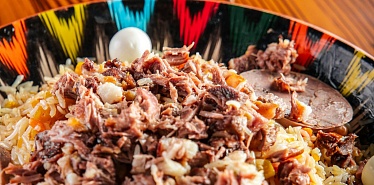
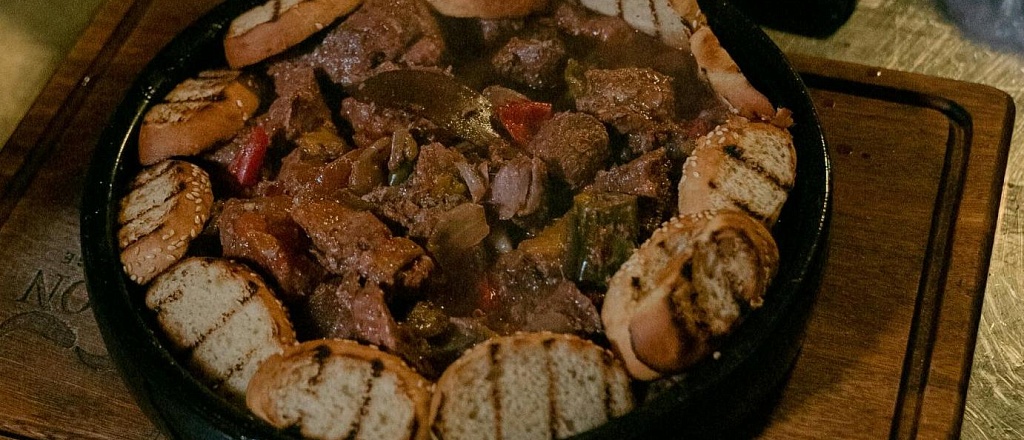

Turkestan is one of the oldest cities in Kazakhstan, and its food scene goes far beyond what you find in tourist spots. Offal-rich kuyrdak, grain-based kozhe with ayran, and layered katlama with kurt are all made using home recipes passed down through families. Here are the dishes that best capture the city’s culinary identity.
Turkestan Kuyrdak
Kuyrdak is one of the oldest dishes in Kazakh cuisine, and in Turkestan it’s prepared in a way rarely seen in city restaurants. The base is lamb and offal — liver, kidneys, heart, and lungs. Everything is fried in a kazan over high heat, then small potatoes, onions, and spices are added. The potatoes absorb the fat and meat juices, creating a rich, dense dish. In tourist restaurants, offal is often replaced with regular meat, so the flavor differs from what locals eat. For the real version, look for kuyrdak at bazaars and small, family-run teahouses.
Katlama
Katlama is a layered flatbread with a local twist. The dough is rolled thin, brushed with oil, then rolled into a log and flattened again. This creates distinct layers that separate during frying, forming a crispy exterior and soft interior. In Turkestan, katlama is often made with kurt — a hard, dried fermented dairy product — which adds a slightly salty, tangy flavor. It’s served hot, straight from the pan, with tea — black or green. Once it cools, it loses its texture, so it’s best eaten immediately. Katlama is street food: you’ll find it at markets and in homes.
Sorpa
Sorpa is a clear meat broth that holds nearly the same importance as a main dish in Kazakh tradition. It’s simmered slowly with minimal ingredients — just meat, salt, onion, and sometimes black pepper — to preserve the pure flavor of lamb. In Turkestan, sorpa is served in large bowls. Before serving, kurt is added to the broth, where it dissolves and adds a signature tang. It’s often part of a larger meal: broth first, then the meat. Tourists are rarely offered it, as it’s considered too simple for restaurant menus, even though that simplicity is exactly the point.
Kok-Samsa
Kok-samsa is a seasonal spring dish made when fresh greens appear. Unlike the usual meat-filled samsa, this version is packed with herbs: jusai — a wild garlic-like plant, spinach, nettle, and sometimes sorrel. A fat tail is added for richness. The dough is layered and thin, and the samsa is baked in a tandoor, just like the meat version. Inside, it’s juicy with a bright, herbal flavor, and much lighter than meat samsa. You won’t usually find it in tourist spots — it’s made at home or sold at markets during the season. If you’re in Turkestan in spring, it’s a must.
Byzhy
Byzhy is a homemade sausage made from offal, rice, and spices, stuffed into intestines. It’s a slow process: the filling is first stewed, then the sausage is boiled for several hours. The result is soft, with a dense, well-seasoned filling. The flavor is rich and distinctive, with the characteristic taste of offal and spices. It’s not for everyone, but it’s one of the most authentic expressions of Southern Kazakhstan’s home cooking. Byzhy is prepared for special occasions — celebrations, weddings, large family gatherings — and rarely appears on everyday restaurant menus.
Opke-Khasip
Opke-khasip is a dish made from lung and a steamed rice sausage. “Opke” means lung, while “khasip” refers to sausage. The lung gives the dish a light, almost airy texture, while the rice inside the sausage expands and holds its shape. It’s either steamed or boiled, depending on the family recipe. Opke-khasip is typically served to guests, as it requires time and skill to prepare. Compared to byzhy, its flavor is milder and more delicate. It’s almost impossible to find in cafés due to the long cooking process.
Kozhe
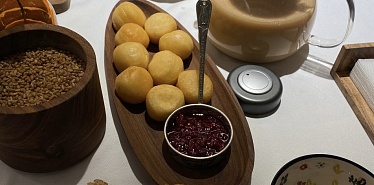
Kozhe is a traditional Kazakh drink made from grains and fermented dairy. In Turkestan, it’s prepared with millet or barley cooked until soft, then mixed with ayran or katyk. The result is a thick, tangy, slightly grainy drink that works as both food and beverage. It’s served chilled, especially in hot weather. Kozhe is filling and refreshing — more of a полноценный snack than a dessert. During Nauryz, it’s made in large batches and shared widely. On regular days, you can find it at bazaars or from home-based vendors.