



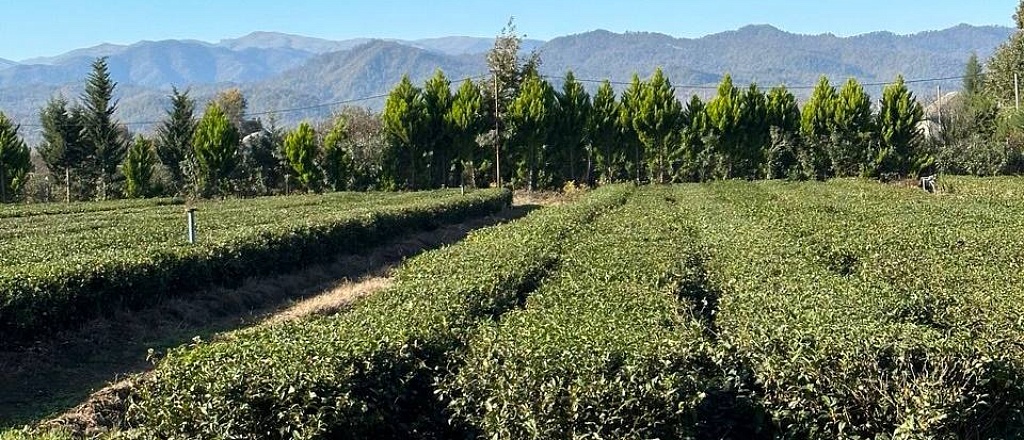

Lankaran is the only city in Azerbaijan recognized by UNESCO as a City of Gastronomy. Set between the Caspian Sea and the Talysh Mountains, it is one of the few places where tea, lemons, and feijoa are cultivated side by side. Here is everything you need to know about the region: from its climate and agriculture to its black sand beaches and signature local dishes.
The Subtropics of Southern Azerbaijan
Lankaran is located in southeastern Azerbaijan, on the coast of the Caspian Sea near the border with Iran. The region stretches across the Lankaran Lowland and rises toward the Talysh Mountains, creating a remarkable variety of landscapes and climatic conditions within a relatively small area.
Its defining feature is a humid subtropical climate, a rarity in Azerbaijan. Winters are mild, summers are hot, and rainfall is abundant, particularly in autumn, with annual precipitation reaching around 1500 millimeters. These conditions make it possible to cultivate crops that are uncommon in most other parts of the country.
Lankaran is also one of Azerbaijan’s oldest cities. Archaeological findings indicate that people settled in the area as early as the Bronze Age, while the city itself dates back to around the 10th century BC.
Azerbaijan’s Tea Capital
Lankaran is the center of Azerbaijan’s tea industry, producing the majority of the country’s tea. Tea cultivation began here in the late 19th century, while the sector experienced significant growth during the Soviet era.
The region’s humid climate, mild temperatures, and fertile soils create conditions similar to those found in Asia’s traditional tea growing regions. Local tea is known for its rich flavor and dark infusion, characteristics shaped by the unique microclimate of the Lankaran Lowland.
Tea’s importance extends far beyond production. It is an essential part of hospitality in the region and was highlighted in the city’s UNESCO application.
Citrus Fruits and Subtropical Crops
One of the defining features of Lankaran’s agriculture is the cultivation of citrus fruits and other subtropical crops. Thanks to the mild climate and high humidity, the region successfully grows lemons, several varieties of mandarins, and feijoa.
Lemon orchards are particularly widespread. Local varieties are well adapted to humid conditions and produce consistent harvests. Citrus fruits are grown both on a commercial scale and in household gardens using traditional farming methods.
Fruit cultivation plays a central role in the region’s gastronomic identity. Lemons and mandarins are widely used in local cuisine, beverages, and traditional preserves. According to UNESCO, gastronomy accounted for approximately 37% of the city’s income and provided employment for more than 15 400 people in 2019.
Black Volcanic Sand Beaches
Lankaran’s beaches are known for their black volcanic sand. Over millions of years, minerals and iron rich sediments from the Talysh Mountains were carried to the coast, forming these distinctive shorelines. Compared to ordinary sand, black sand absorbs heat more quickly, allowing the beach season to begin earlier.
Local residents attribute therapeutic properties to the sand, particularly for joint and cardiovascular conditions. The beaches are located both north and south of the city, with calm waters and gentle entry into the sea. Many beach areas are divided into sections for men, women, and families.
Near the city, in the Haftoni forests, visitors can find the Istisu thermal springs, home to the Lankaran Sanatorium.
Lankaran Cuisine: UNESCO Recognition and Lavangi
In 2023, Lankaran received UNESCO City of Gastronomy status, becoming the first and only city in Azerbaijan to hold this designation. The recognition was based on the region’s rich culinary traditions, unique local ingredients, the annual Tea, Rice, and Citrus Festival, and the significant role gastronomy plays in the city’s economy.
The region’s signature dish is lavangi, a traditional Talysh specialty consisting of fish or chicken stuffed with a mixture of onions, walnuts, and cherry plum sauce. The filling gives the dish its distinctive sweet and sour flavor, typically derived from sour plum sauce or turshu.
Other dishes worth trying include pumpkin pilaf, kuku — a dense herb filled omelet — and Caspian fish prepared in a variety of ways. Local tea is traditionally served in armudu glasses, the iconic pear shaped tea glasses widely associated with Azerbaijani tea culture.