
We have compiled for you the most impressive landmarks of Bukhara, where you can not only enjoy the magnificent architecture and rich history but also feel the unique atmosphere of this ancient city.
Ark Citadel
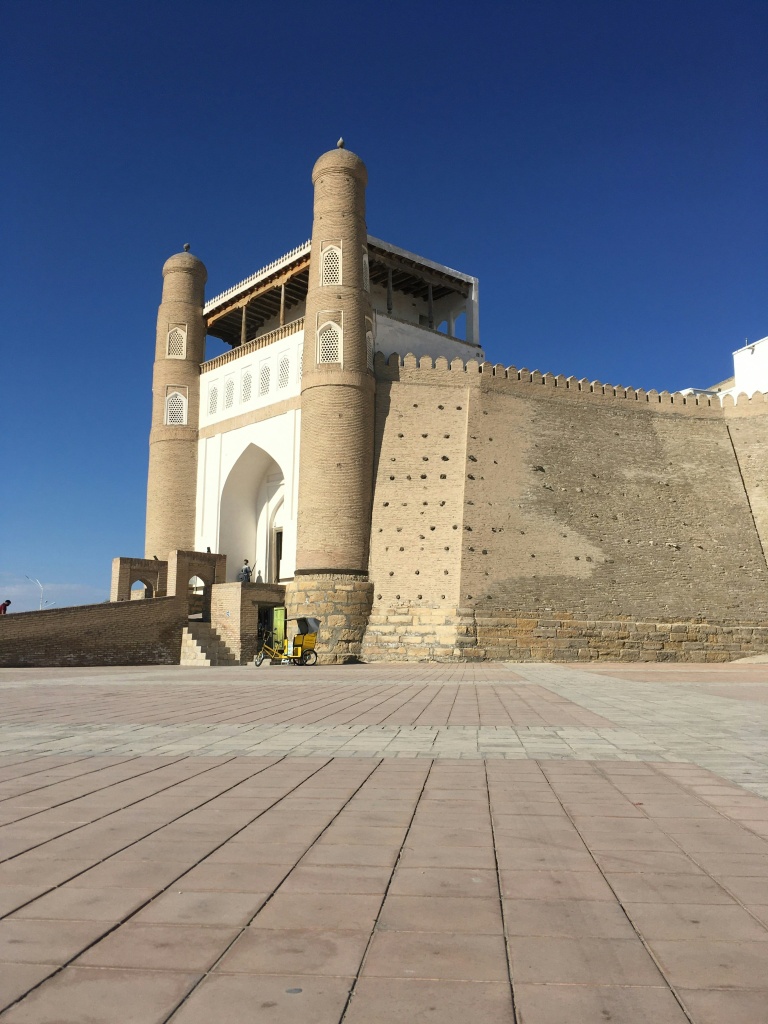
The Ark Citadel is one of the oldest structures in Bukhara, which historians believe may have been the first settlement in the area. Over time, the fortress expanded, its walls strengthened and became higher. For centuries, the citadel served as the residence of the Bukhara emirs and remained a key defensive structure of the city until the early 20th century.
Today, the massive walls of the Ark, which are 16-20 meters high, surround an area of about four hectares. Inside, there is a museum, and some historical buildings have been recreated, including the royal palace for official receptions, a mosque, and other structures. This landmark is always included in tourist itineraries around Bukhara.
Lyabi-Hauz Ensemble
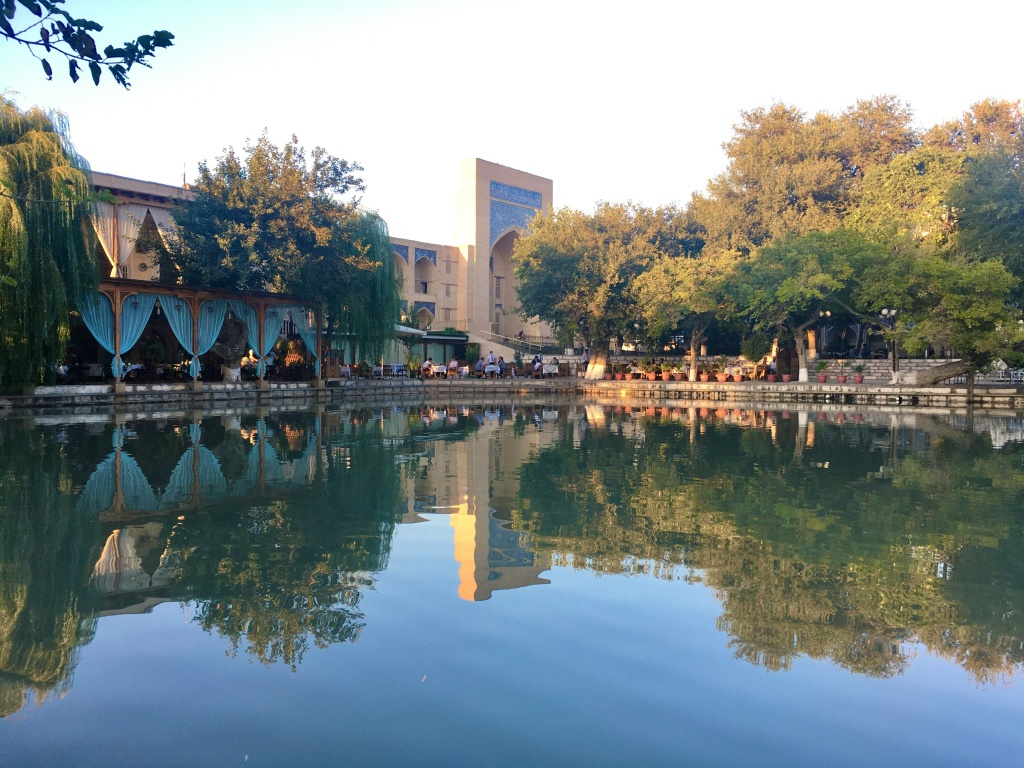
In the hot climate of Central Asia, water sources have always been places of attraction, and Lyabi-Hauz is no exception. For centuries, the people of Bukhara gathered here. They collected water, traded at the market, and rested in the teahouse.
Today, Lyabi-Hauz remains one of the liveliest corners of the city. Dozens of hotels surround it, and many tours of Bukhara start from here. Near the reservoir, there is a cozy café in the oriental style where you can enjoy the atmosphere of the old city. Even after sunset, life here doesn't stop, creating a unique ambiance of welcoming Bukhara.
Poi-Kalyan Architectural Ensemble
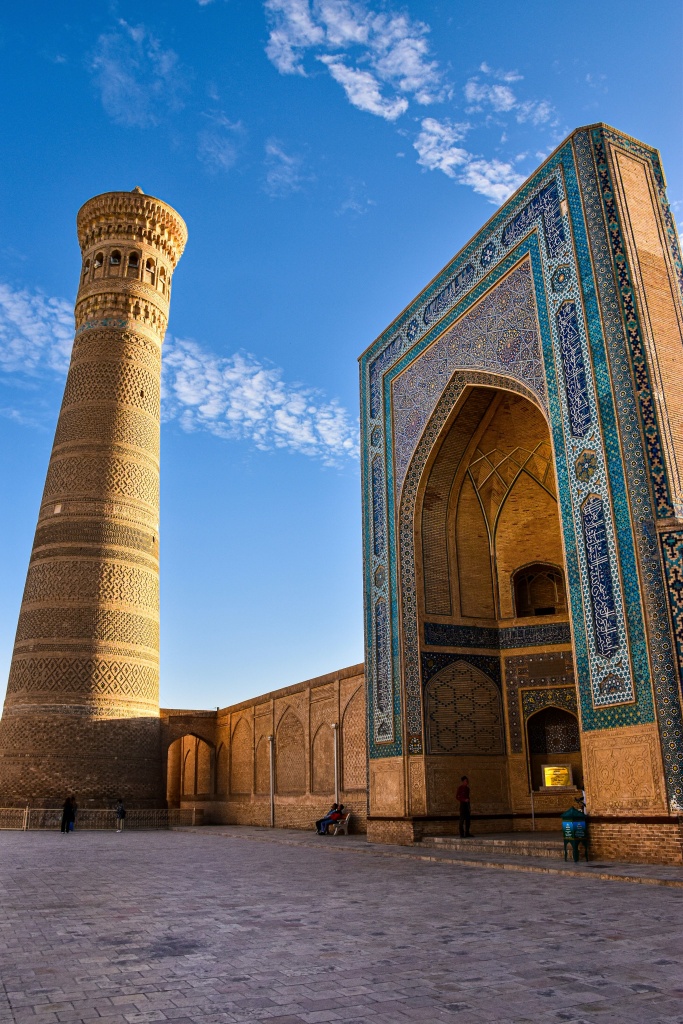
The Poi-Kalyan Ensemble is one of the iconic landmarks of Bukhara, striking with its grandeur and harmony. The architectural ensemble includes the small Amir-Alimkhan Madrasah, the imposing Mir-i-Arab Madrasah with characteristic blue domes, the spacious Kalyan Mosque with graceful arches and a colonnade, and the legendary Kalyan Minaret, which was once the tallest building in the city.
A walk through this complex will take about two hours, and the picturesque views make it an ideal location for photo shoots. Poi-Kalyan is especially impressive in the evening: the soft lighting of the minaret gives the complex a fairytale atmosphere. Given its convenient location between Lyabi-Hauz and the Ark Fortress, visiting the ensemble is easy to include in a walk through Bukhara's historical center.
Chor-Minor Madrasah
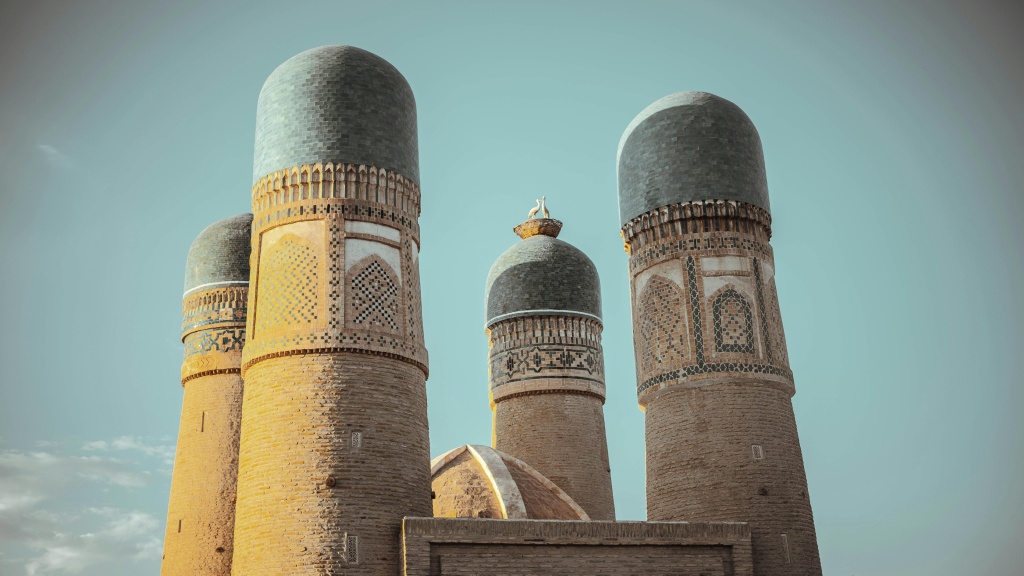
Chor-Minor Madrasah is one of the most unusual landmarks of Bukhara. The name means "Four Minarets," which is fully justified: the building is decorated with four beautiful towers with blue domes, each featuring a unique pattern.
Built in the early 19th century by the wealthy merchant Khalifa Niyaz-Kul, the madrasah was used not only as an educational institution but also as a stopover for caravans. Unlike other madrasahs, it is small in size but attracts many tourists due to its original architecture.
Chor-Minor is located deep in the old streets, so it is easy to miss. However, it is worth stopping by to take beautiful photos, visit a small museum, and feel the atmosphere of ancient Bukhara.
Samani Mausoleum
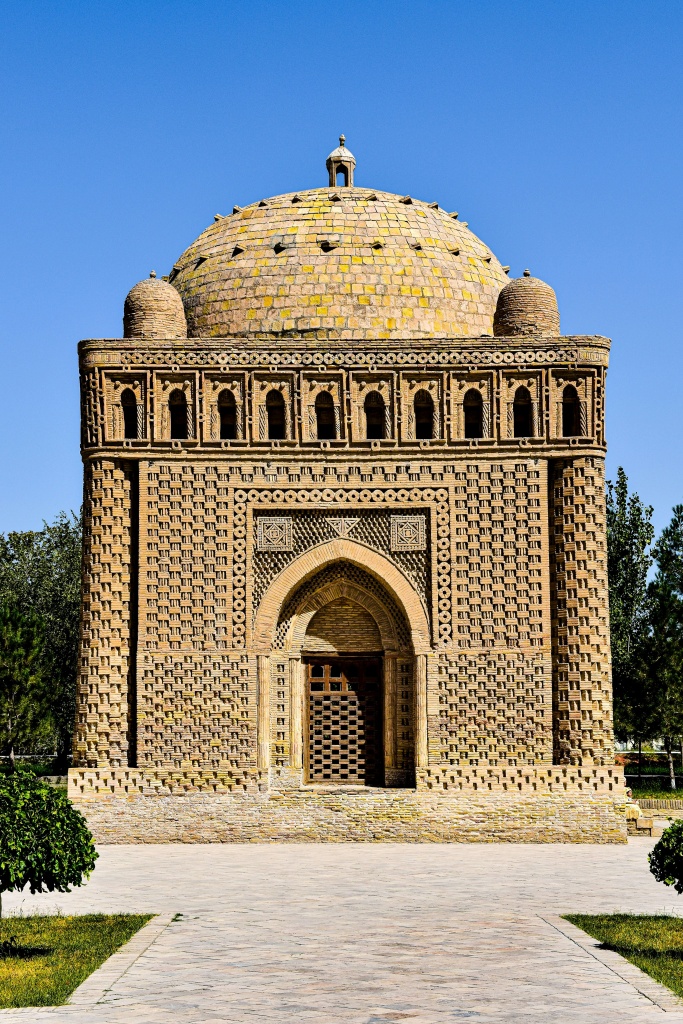
One of the oldest and most beautiful monuments of Bukhara is the Samani Mausoleum. Built in the 9th-10th centuries, it served as the burial place for the representatives of the Samanid dynasty and continues to impress with its architectural beauty.
The mausoleum is famous for its remarkable brickwork, which creates intricate patterns that change depending on the lighting. Despite its small size, its architecture impresses with its harmony and precision of form.
The mausoleum is located in a park near the historical center of the city and has become a must-see. It is not only an architectural masterpiece but also an opportunity to touch the history of Bukhara.
Bukhara Trading Domes
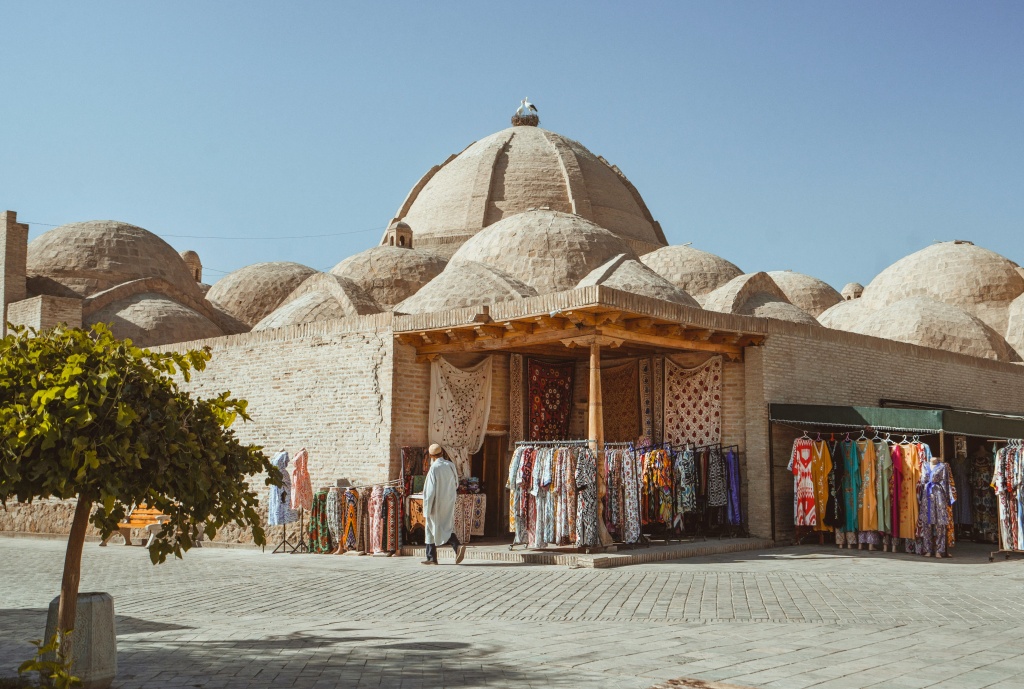
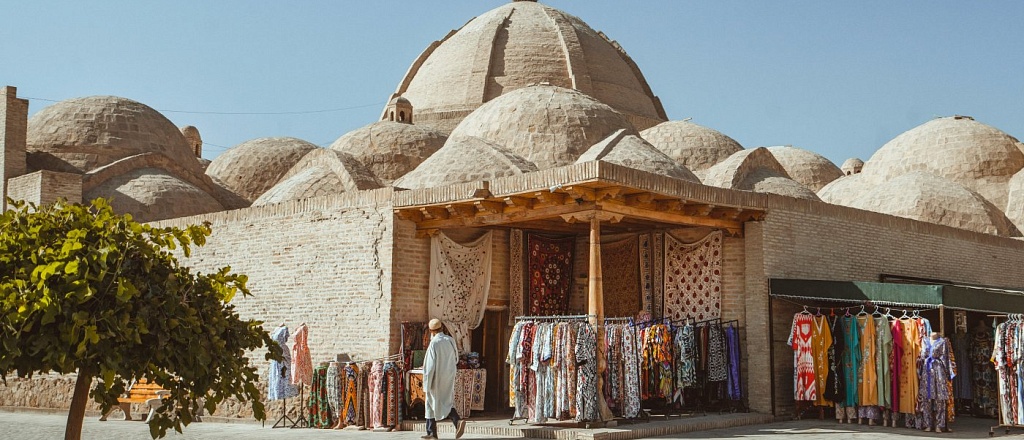
The trading domes of Bukhara are an important part of the city's history. These covered markets, built many years ago, were centers of commerce.
The main domes, such as Toki Zark and Toki Telpachin, were built in the 15th-16th centuries. Each dome was used to sell different goods: from carpets and fabrics to jewelry and books. Their high vaults and vibrant patterns create the atmosphere of an ancient eastern bazaar.
Today, these markets continue to operate. Walking through them is a great opportunity not only to buy souvenirs but also to experience the atmosphere of ancient Bukhara's trade.
Sitora-i-Mokhikhosa Palace
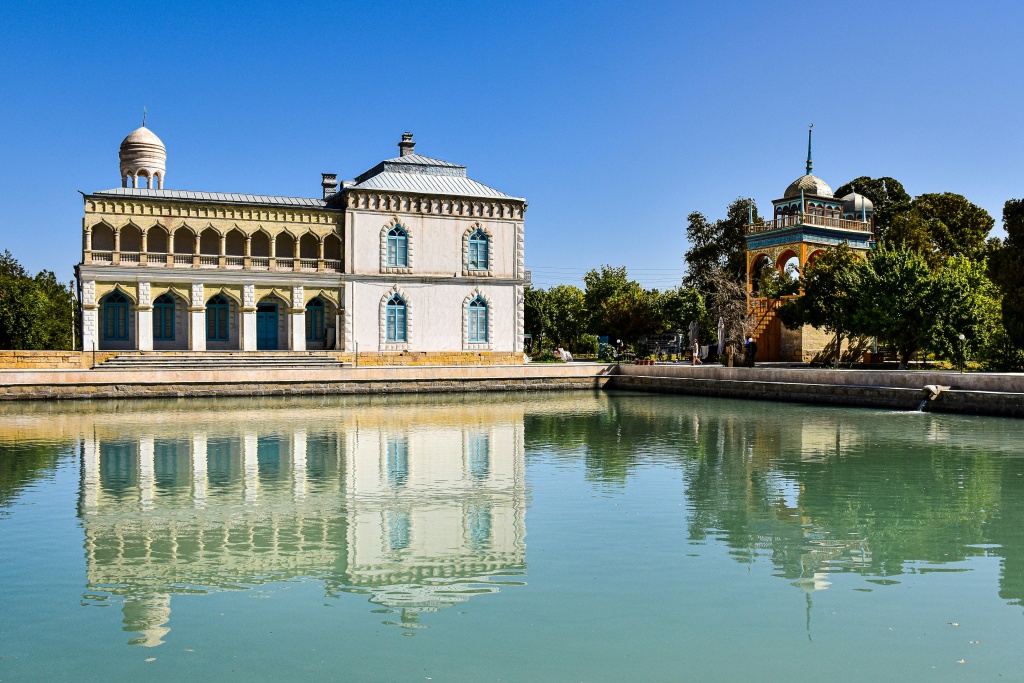
The Sitora-i-Mokhikhosa Palace is a beautiful historical complex located on the outskirts of Bukhara. Built in the early 20th century for the Bukhara emir, it became an example of the combination of Eastern and European architecture.
The palace is famous for its picturesque gardens, decorated with fountains, magnificent interiors with exquisite mosaics and wood carvings. Inside the palace, you can see luxurious rooms, and on its grounds, there are several pavilions where receptions and celebrations were held.
Today, Sitora-i-Mokhikhosa is open to visitors. It is not only a place to explore the history of Bukhara but also a beautiful spot for walks amidst greenery and architectural masterpieces.