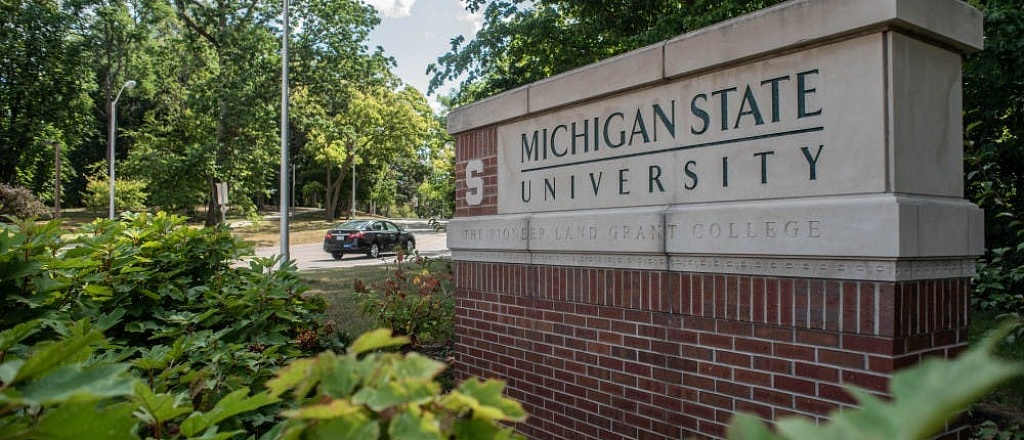

Michigan State University provides a range of funding opportunities for MBA students. From scholarships to assistantships, here’s how to strengthen your application, showcase your achievements, and secure financial support.
Kate Irwin, Associate Director of Admissions in Michigan State University

Funding opportunities for MBA programs
I want to talk a little about unlocking funding opportunities when studying, focusing mainly on my program at Michigan State University. Most of what I share is relevant to other U.S. institutions as well, especially MBA and graduate business programs, so it can be helpful if you are considering a graduate degree in the United States.
When choosing an MBA program, I always recommend paying close attention to the cost of the program, the cost of living in the area, and the types of funding that are available. Many programs offer merit-based awards rather than need-based ones. Need-based awards consider a student’s financial background, but at Michigan State, we focus entirely on the strength of your application. That means the stronger your application, the more funding you are likely to receive.
At Michigan State, we offer funding in three main ways. First, we have scholarships, which are direct financial awards. International students can receive anywhere from $10 000 per year up to a full scholarship that covers all tuition. Second, we offer graduate assistantships, which involve about ten hours of work per week. Students are typically placed within the MBA team, such as assisting admissions, career management, or academic teams, or even working with professors. Graduate assistantships provide a stipend, in-state tuition rates, health insurance, and a waiver for nine credits of tuition, and they can also be combined with scholarships. Finally, we offer fellowships through organizations like Forte and Rhombus. Forte, for example, focuses on supporting women in business, although sometimes male allies are also selected. It’s also possible to combine these opportunities—for example, a student might receive a $10 000 scholarship, be named a Forte Fellow, and hold a graduate assistantship at the same time.
When it comes to building a strong application, there isn’t a single answer. Admissions officers look at every aspect of your profile. We consider academic potential, including your undergraduate degree and GPA. While GMAT or GRE exams are optional for Michigan State, doing well on one of these exams can significantly improve your chances of receiving a high scholarship offer. For non-native English speakers, we require proof of English proficiency through exams like TOEFL, IELTS, or PTE. Applications also include written essays, video essays, and evaluative interviews.
Perhaps most importantly, we look closely at your work experience. We usually expect at least two years of experience after earning a bachelor’s degree. This experience demonstrates your ability to work with others, your leadership potential, and your understanding of the real world, which you can then bring into classroom discussions and projects. Work experience is also crucial if you are considering staying in the U.S. for work after graduation, as it strengthens your resume for recruiting and career opportunities.
Key components of a strong application
When it comes to evaluating an MBA application, personal characteristics are just as important as academic achievements. Admissions officers look for leadership skills, communication abilities, and other soft skills. References are also required, giving insight into your professional and personal qualities.
A strong application demonstrates a clear interest in the program and shows that you’ve done your research. You need to explain why you want to pursue an MBA, how it fits with your career, and what you hope to achieve. This is communicated through written essays, video essays, and the evaluative interview, which typically lasts around 20 to 25 minutes. Preparing thoroughly means understanding the program, the industry, and the companies you hope to work for after graduation. Make sure your story aligns with these goals and that you answer questions directly without going off track.
Your resume is critical. Keep it concise, ideally one page, highlighting your accomplishments clearly and quantifying results whenever possible — for example, “increased production by 10%” or “saved $100 000.” Use varied action verbs like “led,” “excelled,” or “improved” rather than repeating generic terms. Format your resume neatly, check for spelling and grammar, and follow any submission guidelines, including naming conventions for documents.
If your application is strong, you’ll likely be invited to an evaluative interview. Not all applicants reach this stage; at Michigan State, about half of the applications proceed to interviews with myself, the director of admissions, or sometimes graduate assistants. This is where your personality should shine. The introduction should be brief and focused — not a full resume walkthrough. For example, you might say: “Hello, my name is Kate Irwin. I’m the Senior Associate Director of Admissions at Michigan State, and I am pursuing an MBA because I want to work in supply chain logistics. I am particularly interested in your program because of its strong supply chain outcomes.”
The key is to make your introduction concise, clear, and compelling while showing that you understand how the program aligns with your career goals.
Preparing for the interview
In preparing for an MBA interview, practicing behavioral questions is crucial. These questions focus on your personality, problem-solving skills, and how you handle different situations. You might be asked to describe a conflict with a coworker or a time you faced a last-minute project deadline. The goal is to take the interviewer through your journey, from start to finish, showing how you approach challenges and work with a team.
Later in the interview, you will discuss your background, why you want an MBA, and how you plan to combine your experiences with the program to reach your future goals. Clear career goals are important, and so are interpersonal skills, communication, presentation, and teamwork. Dressing in business attire, whether formal or business casual, helps create a professional impression, whether the interview is in person or online.
For answering behavioral and situational questions, I recommend the STAR method. This involves explaining the Situation, the Task at hand, the Action you took, and the Result achieved. Using this method allows you to tell your story concisely and clearly, which is especially important if your work is in a complex field. Avoid technical jargon that the interviewer might not understand, and focus on the key points that show your skills and results.
Research is another essential step. Learn as much as you can about the school, the program, and even your interviewer if you know who it will be. Understanding recent news, social media updates, or student achievements can help you ask thoughtful questions at the end of the interview. This demonstrates genuine interest and preparation. Always have one or two questions ready, as it shows engagement and curiosity about the program.